Headline equestrian industry statistics
Equestrian Participation Statistics
- 4.3 million people have a direct interest in equestrianism, of which 3.2 million who can ride and 1.82 million riding regularly* while it’s estimated some 27 million have some sort of interest.
- Racing is Britain’s second largest spectator sport behind football with an attendance of just over 5 million in 2025.
- According to Sport England’s Active Lives data, in the 2023–2024 academic year, around 177,400 children rode horses at least once a week and the adult data finds that 740,700 adults reported riding at least once a year, with 273,400 riding at least once a month.
- The equine population of the UK is around 850,000 with 331,000 horse-owning households.
- Around 20,000 horses enter training in racing stables in Britain each year. These horses are provided with hands on care in training yards by approximately 8,000 members of stable staff nationwide.
- Britain’s first Thoroughbred Census was completed in 2023 and demonstrated a former racehorse population of 33,600 with 80% active and identifiable.
- There are around 178 million riding days per year in the UK from pleasure riding to elite competition.
- British Equestrian and 19 member bodies account for over a quarter of a million human memberships (295,965) across participants, workforce, officials and volunteers – around 275,000 participants, 8,600 coaches, 4,800 officials, 6,000 owners and staff at riding centres, 1,000 riding clubs/groups and 700 affiliated centres.
- Social followers across British Equestrian and member bodies total just over 2.3 million (duplicates across the platforms) – with 56% being from Facebook.
- There has been a 15% drop in the number of riding schools in the four-year period 2018–2020 meaning around 1.5 million fewer riding lessons.
- Riding centres currently operate at about 75% capacity due to paid workforce and horsepower issues.
- Racing opens the doors to studs, training yards, and aftercare centres nationwide every year as part of National Racehorse Week. Since 2021, more than 65,000 free places have been made available and community outreach activity has connected an additional 10,000 people with the thoroughbred.
Equestrian Industry Demographics
- The demographic profile of regular riders: A/B 32%, C1 29% and C2, D, E 39%.
- Equestrian sports are hugely proud of gender equality – there is parity across the piece with mixed competitions/races, equal prize money and total integration.
- 88% of regular riders are female.
- 40% of riders are aged 25–44, 45% are under 24 and 15% are over 45.
Value
- The equestrian sector is an important part of Britain’s culture and economy with an economic impact worth an estimated £9.1 billion to the UK economy. The thriving horseracing industry accounts for some £4.1 billion while the wider equestrian activity contributes £5 billion with a further £500m in overseas trade.
- Research published by British Equestrian in October 2025 showed equestrianism annually delivers £1.2 billion of social value, with each riding centre providing an average of £292,000 worth of value per year, measurable evidence of our sector’s role as a national wellbeing resource. Additionally social value includes:
- On-horse participation: £2,000 of social value per year for an adult riding twice monthly or £3,500 per year for a young person riding weekly
- Off-horse participation: £2,000 of social value per person per year
- Volunteering: £2,100 of social value per year for weekly volunteering or £1,000 per year for monthly volunteering
- The equestrian industry is the second largest rural employer behind agriculture – with 18,000 equestrian businesses operating with around 250,000 people employed both directly and indirectly (including racing).
- Racing specific employment covers 20,000 jobs directly, and 85,000-plus when including both direct and indirect employment – from racehorse breeders to trainers, racing staff, jockeys, vets and racecourse teams.
- Project Beacon, British racing’s largest ever consumer research project, estimated an addressable market of 25.2 million British adults for horseracing alone.
Equine guardianship
- Launched in March 2024, The Charter for the Horse serves to unite the industry and demonstrate our collective commitment to safeguarding the mental and physical wellbeing of all equids. Six areas – empathy, care, respect, consideration, ethics and learning – outline our responsibilities.
- Racing is the country’s largest investor in advancing equine health, research, veterinary science, and education which benefits all breeds of horses. More than £63 million has been invested since 2000.
- British Equestrian’s strategy puts the horse as the organisation’s guiding principle and an unquestionable commitment to upholding our guardianship of horses.
- British racing has an independently-chaired Horse Welfare Board and a long-term strategic welfare plan “A Life Well Lived”. Launched in 2020, 22 projects are ongoing to drive continuous improvement across safety, wellbeing, aftercare, and traceability.
- British Equestrian’s equestrian welfare programme is supported by two dedicated groups, an Equine Welfare Steering Group and the Equine Welfare and Ethics Advisory Group who are responsible for governance, direction and development. The World Class Programme is underpinned by an Equine Science Advisory Group.
- Each of the 19 British Equestrian member bodies has a dedicated Equine Welfare Officer who work to uphold standards and support welfare case reporting.
- The British Equestrian Rule Book was revised in January 2025 with an enhanced Code of Conduct, Whistleblowing Policy and Equine Ethics and Welfare Policy.
- Racing has a dedicated aftercare partner Retraining of Racehorses (RoR). In place since 2000, RoR helps drive demand for retired racehorses through its competition series and provides a wealth of retraining and rehoming support. Over 15,500 active horses are registered with RoR, representing almost half of the former racehorse population.
- Racing has committed to achieving 100% traceability at a Thoroughbred’s first step out of racing to tailor ongoing support for both horses and new owners.
- Racing has a dedicated equine welfare information hub www.horsepwr.co.uk which provides facts and data for the public across the life of a horse bred for racing.
- World Horse Welfare, a British Equestrian member body, published their vision for the responsible involvement of horses in sport in Spring 2026 which provides evidence-informed guidance on providing horses with a good life and the practical application to horses in sport.
* Riding regularly defined as riding at least once a month for the last 12 months.
Sources:
The National Equestrian Survey 2023
The British Horse Council Manifesto 2023
The British Equestrian State of the Nation Report 2025
British Horseracing Authority
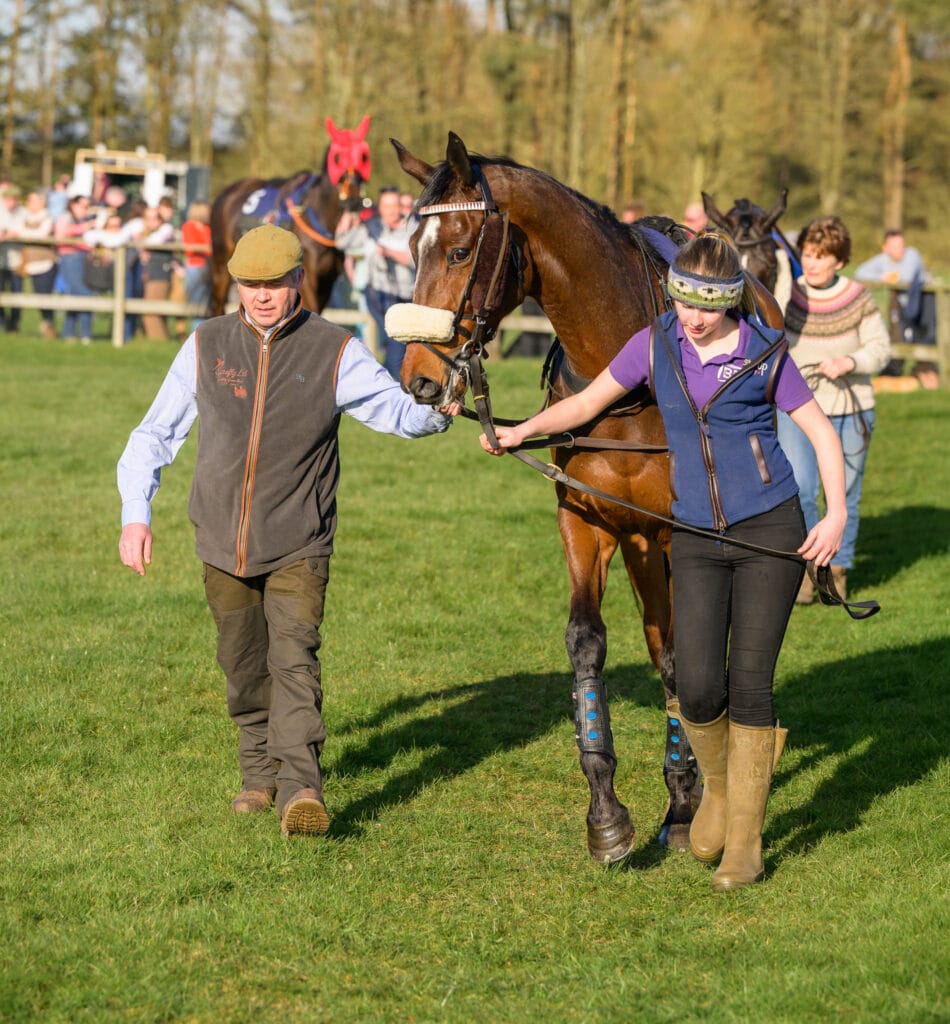
Image Credit: Nico. Morgan
All Articles